
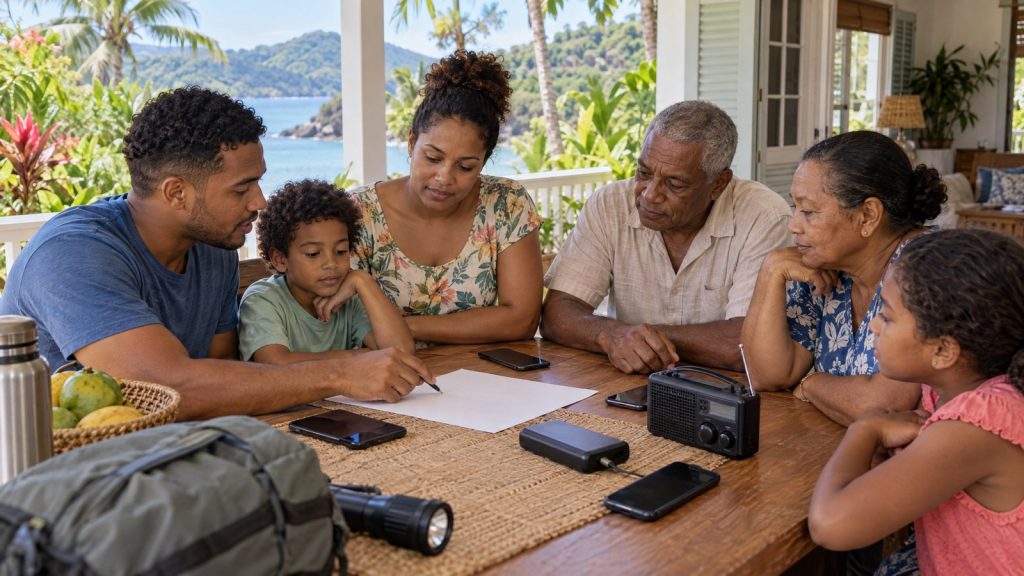
During a disruption, family members may be at home, school, work or travelling between Seychelles communities. A short written communication plan reduces guesswork and remains useful when internet or electricity is unreliable.
Choose contacts and places
Write each person’s number, a trusted contact outside the immediate area, school or care contacts, and key medical information. Choose a familiar meeting place near home and another outside the neighbourhood, away from flood channels, unstable slopes and exposed shorelines.
Agree on messages
Decide who checks the Seychelles Meteorological Authority’s current alerts and how the household confirms safety. Keep messages brief: name, location, need and time. If calls fail, try text when appropriate. Keep a paper copy in wallets, school bags and the kit.
Plan for separation
List normal locations and routes. Identify who collects children and supports an older person, disabled person or pet. Give trusted caregivers relevant information. Agree that nobody travels through floodwater, a blocked road or an active slide to reunite.
Practise and update
Run a quiet drill: each person finds the card, names meeting places and sends a sample message. Review after a move, new phone number, school or health change. Use large print, pictures or another language if that helps.
Keep it calm
Prepared communication is reassurance, not a promise that every message will arrive. Follow official instructions, avoid rumours and use the agreed contact chain rather than taking an unsafe shortcut.
Preparedness is most useful when it becomes a normal household habit. Review this checklist with the people who share your home, adapt it to your location and abilities, and keep practical supplies where they can be reached. Conditions can change quickly across the islands, so use current official information for decisions about travel, shelter and safety. If a task seems hazardous, pause and seek qualified help rather than improvising. Share updates with household members, check supplies after use, and revisit the plan whenever someone’s needs or contact details change. Keep decisions practical, calm and proportionate to the information available.
Further guidance
- Ready.gov: Make a plan (general international guidance)
- Seychelles Meteorological Authority: Weather warnings
- IFRC: Prepare your family and home (general international guidance)
An insight from the Development and Resilience Research Monitor (DRRM).