
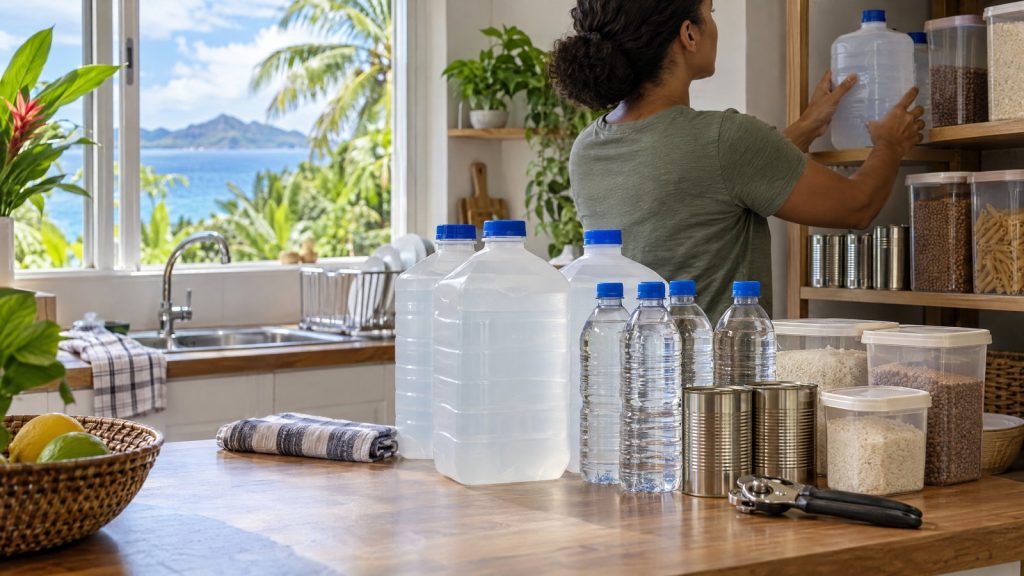
Seychelles households can be affected by heavy rain, flooding, strong winds, power interruptions or a temporary interruption to normal supplies. A little preparation makes it easier to protect drinking water and food without panic. Choose a cool, dry storage place above any likely flood level, and review supplies regularly.
Keep commercially sealed drinking water and foods that can be eaten with little or no cooking. Include familiar items for babies, older people, pets and anyone with dietary needs. Use clean, covered containers and label the date stored. Rotate items into everyday use before their best-before dates, then replace them. Keep food away from fuel, cleaning products, heat, insects and rodents.
If an official message says tap water may be unsafe, use bottled, boiled or otherwise locally approved treated water for drinking, brushing teeth, making ice, preparing food and infant formula. Do not guess at treatment amounts: follow the current advice on the product label or from the responsible health or water authority. Keep hands, cups and containers clean.
During a power cut, open the refrigerator and freezer as little as possible. Use a thermometer if available and discard perishable food that became warm, thawed or questionable. Never taste food to test it. Floodwater and stormwater can carry sewage or chemicals: throw away food, open packages, cardboard containers and damaged cans that may have touched it. When in doubt, throw it out.
Plan for safe cooking too. Store a manual can opener, soap, clean cloths and a way to prepare food without relying on electricity. Never use a charcoal grill, camping stove or fuel generator indoors or near doors and windows. Keep a simple written stock list so the household knows what is available and what needs replacing.
Practical checklist
- Store water and food raised from the floor.
- Keep a three-day starting supply, adjusted for household size and local advice.
- Separate ready-to-eat food from raw food and cleaning chemicals.
- Write down allergies, special diets and pet needs.
- Follow official local water notices; do not rely on rumours.
Source note: For Seychelles warnings and instructions, follow the Seychelles Meteorological Authority (meteo.sc) and relevant local authorities. The other links below are general international guidance, not Seychelles-specific requirements.
Further guidance
- FoodSafety.gov: Food safety in a disaster or emergency
- CDC: Re-entering a flooded home safely
- American Red Cross: Thunderstorm safety
An insight from the Development and Resilience Research Monitor (DRRM).