
Tropical humidity can make dampness persist long after rain has stopped. After flooding, mould may grow quickly on wet wood, wallboard, carpet, paper and furniture, while floodwater may also contain sewage, chemicals or sharp debris. The safest cleanup starts with deciding whether the building and utilities are safe to enter, not with rushing to scrub.
Enter during daylight if possible and use a battery torch rather than a candle. If standing water prevents safe access to the electrical switch, do not step into it: arrange for a qualified electrician. Do not use a generator, fuel engine or grill indoors, in a garage or near windows. People with asthma, allergies, weakened immunity, children and pregnant people should avoid mouldy cleanup areas and seek professional advice where needed.
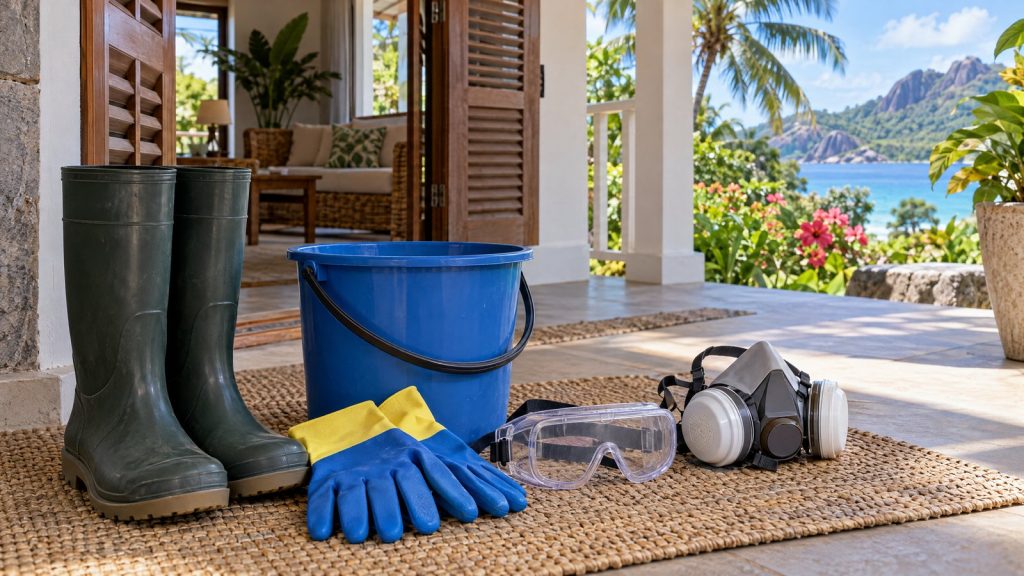
Wear suitable protective clothing and follow product labels. Open doors and windows when conditions allow, but do not use fans to blow across visible mould before gentle cleaning, because spores can spread. Remove and isolate porous materials that cannot be cleaned and dried. Clean hard surfaces gently with detergent and clean water; never mix cleaning products or add bleach to another chemical. Dry thoroughly with safe ventilation and approved equipment.
In a humid home, prevent recurrence by using kitchen and bathroom exhaust fans, airing rooms when outdoor conditions permit, drying wet clothes thoughtfully and fixing leaks promptly through the owner or a qualified professional. Keep furniture slightly clear of walls for airflow and store paper and cardboard off the floor. Do not paint, seal or close damp areas until they are dry inside.
If mould is extensive, hidden in walls, or linked to a contaminated ventilation system, pause and engage an experienced cleanup or building professional. Keep a simple record of wet areas, discarded items and expenses. Health concerns deserve advice from a healthcare professional rather than a home test or guess.
Practical checklist
- Stop the moisture source and photograph conditions before moving items.
- Keep children and people with breathing problems away from mould.
- Use gloves, eye protection and a suitable respirator as advised.
- Ventilate safely and dry materials completely.
- Use qualified help for extensive contamination or affected ventilation systems.
Source note: For Seychelles warnings and instructions, follow the Seychelles Meteorological Authority (meteo.sc) and relevant local authorities. The other links below are general international guidance, not Seychelles-specific requirements.
Further guidance
- U.S. EPA: Flood cleanup and indoor air
- Health Canada: Moisture and mould in the home
- CDC: Re-entering a flooded home safely
An insight from the Development and Resilience Research Monitor (DRRM).