
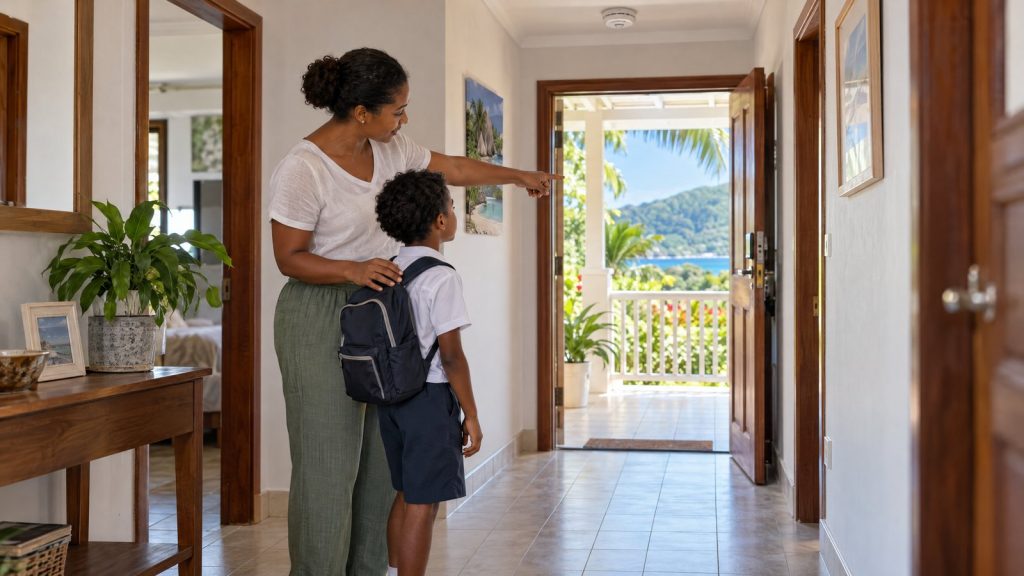
A home fire can become dangerous before everyone has time to think. Prevention and a practiced exit plan are especially valuable in a compact island home, apartment or rented room where smoke may travel quickly. Walk through the household together and adapt the plan for children, older adults, visitors, pets and anyone who uses a mobility aid.
Place working smoke alarms as recommended by the manufacturer and test them regularly. Replace batteries and the whole unit on schedule. Keep cooking attended, turn handles inward and keep cloth, paper and curtains away from heat. Store matches, lighters, fuels and cleaning chemicals securely. Replace damaged cords, avoid overloaded outlets and ask a qualified electrician about hot switches, flickering lights or repeated trips.
Draw a simple floor plan and identify two ways out of every room where possible. Keep corridors, stairs, doors and windows clear; ensure security bars or screens can be opened from inside. Choose an outdoor meeting point a safe distance from the home. Practise leaving in darkness, closing doors behind you and calling for help once outside. Never go back for phones, documents or pets.
If an alarm sounds, stay low under smoke, feel a door before opening it and use the second route if it is hot or smoky. If trapped, close the door, block smoke gaps if possible, signal from a window and provide your exact location to responders through the current official emergency channel. Do not use lifts where present. Once out, stay out.
After a fire, wait for the fire service or a qualified professional to say the home is safe. Do not reconnect electricity, gas or other utilities yourself. Record damage from a safe place and keep receipts. Prevention is not about fear; it is about making the first safe action automatic.
Practical checklist
- Test smoke alarms and keep escape routes clear.
- Practise the plan twice yearly and after household changes.
- Keep a safe outdoor meeting place.
- Leave immediately; never re-enter for possessions.
- Have a qualified professional check affected utilities.
Source note: For Seychelles warnings and instructions, follow the Seychelles Meteorological Authority (meteo.sc) and relevant local authorities. The other links below are general international guidance, not Seychelles-specific requirements.
Further guidance
- Ready.gov: Home fire safety
- U.S. Fire Administration: Home fire escape planning
- Ready.gov: Make an emergency plan
An insight from the Development and Resilience Research Monitor (DRRM).