
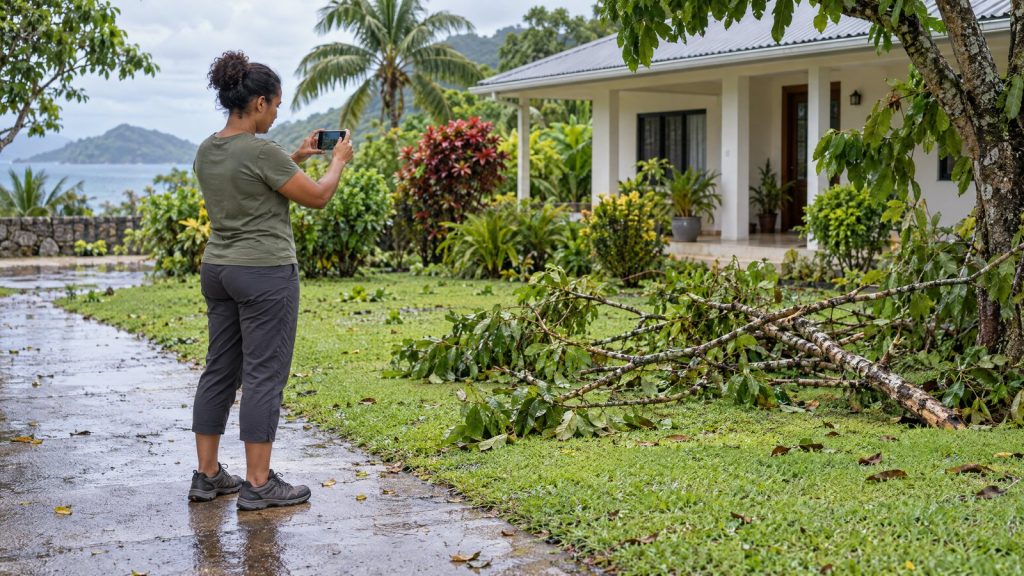
Recovery begins with patience. After severe rain, wind, flooding or coastal impacts, a home may look familiar while hiding electrical, mould, sewage, gas, unstable-material or contamination hazards. Follow current official information and do not treat a cleared road or quiet sky as proof that every building is safe.
Return in daylight if possible with a charged phone, sturdy footwear and a battery light. If there is standing water, a gas smell, damaged wiring, unusual movement, or extensive contamination, leave and obtain qualified help. Never enter water to reach a switch. Have an electrician assess affected electrical systems and use only equipment that is completely dry and approved for service. Keep generators and fuel engines outside, well away from openings.
Protect health while cleaning. Keep children, pets, pregnant people and those with respiratory or immune conditions away from mouldy or sewage-contaminated areas. Wear appropriate protective equipment, wash hands and avoid stirring dust. Open windows when safe, dry damp materials promptly and use cleaning products only as labelled; never mix them. Throw out food touched by floodwater, food that became warm and water that authorities say is unsafe.
Document damage from safe locations with photos, dates and notes. Save receipts, report losses through the proper insurer or landlord route, and ask before disposing of items that may need inspection. Be cautious of unsolicited repair offers, requests for advance cash or links seeking personal information. Use qualified, traceable professionals and ask for written estimates.
Recovery can be emotionally tiring. Break work into small tasks, rest, drink safe water and accept practical help. If a home cannot yet be occupied, plan a safe temporary arrangement rather than taking risks. Reopen rooms only after dampness, utilities and hazards have been assessed.
Practical checklist
- Wait for reliable safety information before returning.
- Use battery lighting and avoid candles in damaged spaces.
- Keep away from contaminated water, wires and gas smells.
- Dry safely and seek qualified help for electrical or extensive mould issues.
- Record damage and beware of scams.
Source note: For Seychelles warnings and instructions, follow the Seychelles Meteorological Authority (meteo.sc) and relevant local authorities. The other links below are general international guidance, not Seychelles-specific requirements.
Further guidance
- CDC: Re-entering a flooded home safely
- U.S. EPA: Flood cleanup and indoor air
- FoodSafety.gov: Food safety in a disaster or emergency
An insight from the Development and Resilience Research Monitor (DRRM).