
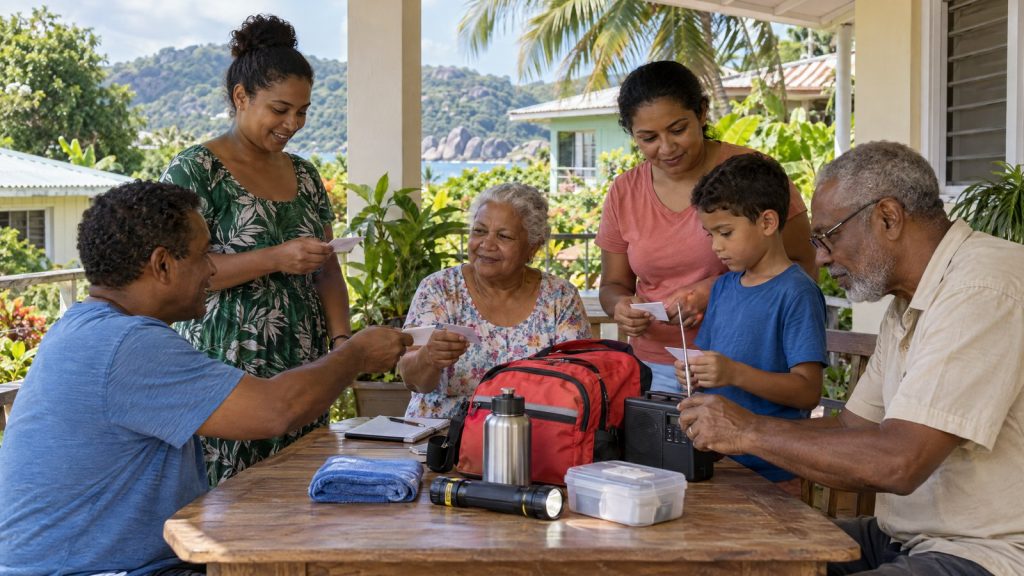
A prepared neighbourhood does not depend on everyone doing the same thing. It connects households so useful information, practical skills and safe assistance are available before, during and after severe weather. Begin with consent and respect: people choose what they share, and help should never expose a volunteer or neighbour to a hazard.
On a calm day, identify trusted ways to exchange verified weather and safety information. Ask, without pressuring, whether nearby households may need extra time or help because of age, disability, illness, language, children, pets or transport. Do not create a public list of medical details. Agree on a simple check-in method and a meeting place away from flood-prone roads, shorelines, trees and power lines.
Neighbourhood preparedness can be modest: clear shared drainage only where it is safe and authorised, keep access lanes and exits unobstructed, share reminders about securing loose objects, and coordinate a buddy system for receiving alerts. Encourage each household to keep its own water, medicines, documents, torch and food. A community group is a supplement, not a substitute for official instructions or professional responders.
During a storm, do not form a rescue party, enter floodwater, approach fallen wires or visit an unsafe building. Share verified updates without forwarding rumours or private images. If someone needs urgent help, use the current official emergency route for your island and situation. Volunteers can offer safe support such as a phone call, a meal prepared with safe water, transport only when roads are confirmed safe, or help contacting a qualified service.
Afterward, check in from a safe location and respect privacy. Record unmet needs and pass them through appropriate local organisations rather than promising services you cannot provide. Thank helpers, rest and review what worked. The strongest neighbourhood is one that communicates clearly, protects vulnerable people and knows when to step back for trained responders.
Practical checklist
- Build a consent-based buddy system and keep information private.
- Share verified alerts, not rumours or unconfirmed casualty reports.
- Keep household supplies independent of group plans.
- Never enter floodwater or damaged buildings to help.
- Offer low-risk support and escalate hazards through official channels.
Source note: For Seychelles warnings and instructions, follow the Seychelles Meteorological Authority (meteo.sc) and relevant local authorities. The other links below are general international guidance, not Seychelles-specific requirements.
Further guidance
- Ready.gov: Make an emergency plan
- American Red Cross: Thunderstorm safety
- Seychelles Meteorological Authority: Impact-based forecasting and early warnings
An insight from the Development and Resilience Research Monitor (DRRM).