
CCCL and the work of building back better after a multi-hazard disaster
October 22, 2026
A disaster is not only the moment of impact
On 7 December 2023, an explosion at the Civil Construction Company Limited (CCCL) explosives store caused extensive damage in and around Providence Industrial Estate, while heavy rain was causing serious flooding elsewhere. The contemporary account from Reuters and the President’s official statement establish the essential facts without requiring speculation about the blast’s cause or a final allocation of responsibility.
The physical damage was also a social and economic event. Residents and business owners later described damaged homes, interrupted livelihoods and continuing repair problems to the Seychelles News Agency. Their accounts matter because recovery is measured not only by cleared debris or repaired walls, but by whether people can safely live, work and recover their income.
One assessment, two disasters
The Ministry of Finance’s 14 December 2023 announcement shows why an integrated assessment can support recovery while keeping the hazards distinct. It said the Government, with World Bank support, would conduct a rapid damage and loss assessment covering both the flooding and the explosion. The assessment was designed to examine damage to infrastructure and assets, disruption to productive sectors and services, social and economic effects, and recovery needs. That framing is evidence-led: it identifies what must be measured without claiming that the two hazards had the same source, mechanism or solution.
For the Development and Resilience Research Monitor (DRRM), this is the central lesson. The United Nations Office for Disaster Risk Reduction (UNDRR) defines a hazard as a process, phenomenon or human activity capable of causing harm, and recognises that hazards can be technological, hydrometeorological, combined or cascading. Risk is not the hazard alone. It is the potential loss determined by the interaction of hazard, exposure, vulnerability and capacity, according to UNDRR’s risk definition.
Separation helps, but it is not explosion prevention
A practical planning response is to reduce the number of people, homes, businesses and critical services located within the credible impact area of hazardous industrial activities. In UNDRR’s language, that is exposure: people and assets situated in hazard-prone areas. Better separation can therefore reduce the scale of harm if an incident occurs. It can also support safer evacuation, access for emergency services and continuity planning.
But separation is not a guarantee that an explosion will not happen. It does not substitute for lawful storage, inventory control, engineering safeguards, inspection, worker competence, emergency procedures or enforcement. Nor can a generic buffer distance prove safe for every site. The appropriate boundary depends on the material, quantity, storage design, terrain, blast and fire scenarios, nearby infrastructure, access routes and the people who may be present at different times.
That is why any future land-use decision around CCCL should be based on a transparent, site-specific risk study, with assumptions and uncertainties made public. The study should map exposed assets, model credible scenarios, assess vulnerability and capacity, test evacuation and emergency access, and set controls that can be monitored. It should inform both industrial licensing and community planning. A separation policy that is not backed by this analysis risks becoming a reassuring line on a map rather than a defensible reduction in risk.
Recovery needs accountability and resilience
Vulnerability is shaped by physical, social, economic and environmental conditions; capacity includes the infrastructure, institutions, skills and resources available to manage risk, as UNDRR explains. In practice, that means recovery should ask who can afford repairs, whose workplace remains unusable, whether information is accessible, whether assistance reaches renters and small businesses, and whether authorities have the capability to inspect and enforce safety requirements.
The Commission of Inquiry began hearing witnesses in 2026. Reporting by the Seychelles News Agency says its mandate includes examining the circumstances of the explosion, compliance with laws and procedures for explosive materials, potential liabilities and recommendations to prevent a recurrence. Reporting that hearings began is not itself a finding about the cause or responsibility. This article does not treat allegations or proposed causes as established inquiry conclusions.
UNDRR defines disaster risk reduction as preventing new risk, reducing existing risk and managing residual risk. Applied here, that means not rebuilding the same exposure, correcting weaknesses revealed by the incident, and maintaining preparedness for the risk that cannot be eliminated. It also means using the recovery window to improve social and economic resilience, not simply restoring the pre-event layout.
What “build back better” should mean at Providence
Build Back Better is not a slogan for faster reconstruction. UNDRR defines it as integrating disaster-risk-reduction measures into the restoration of infrastructure and societal systems, and into livelihoods, economies and the environment. For Providence, that principle points to a package: independent site-specific risk analysis; enforceable controls for explosives; land-use decisions based on credible impact scenarios; resilient repairs; clear public warning and evacuation arrangements; accessible compensation and livelihood recovery; and an accountable review of what failed.
The 2023 event should therefore be treated neither as an argument against industry nor as a justification for returning to business as usual. It is a test of whether institutions can convert evidence into safer choices. The measure of recovery will be whether residents and businesses face less exposure, less vulnerability and stronger capacity than before—and whether the next risk is prevented rather than merely managed after harm occurs.
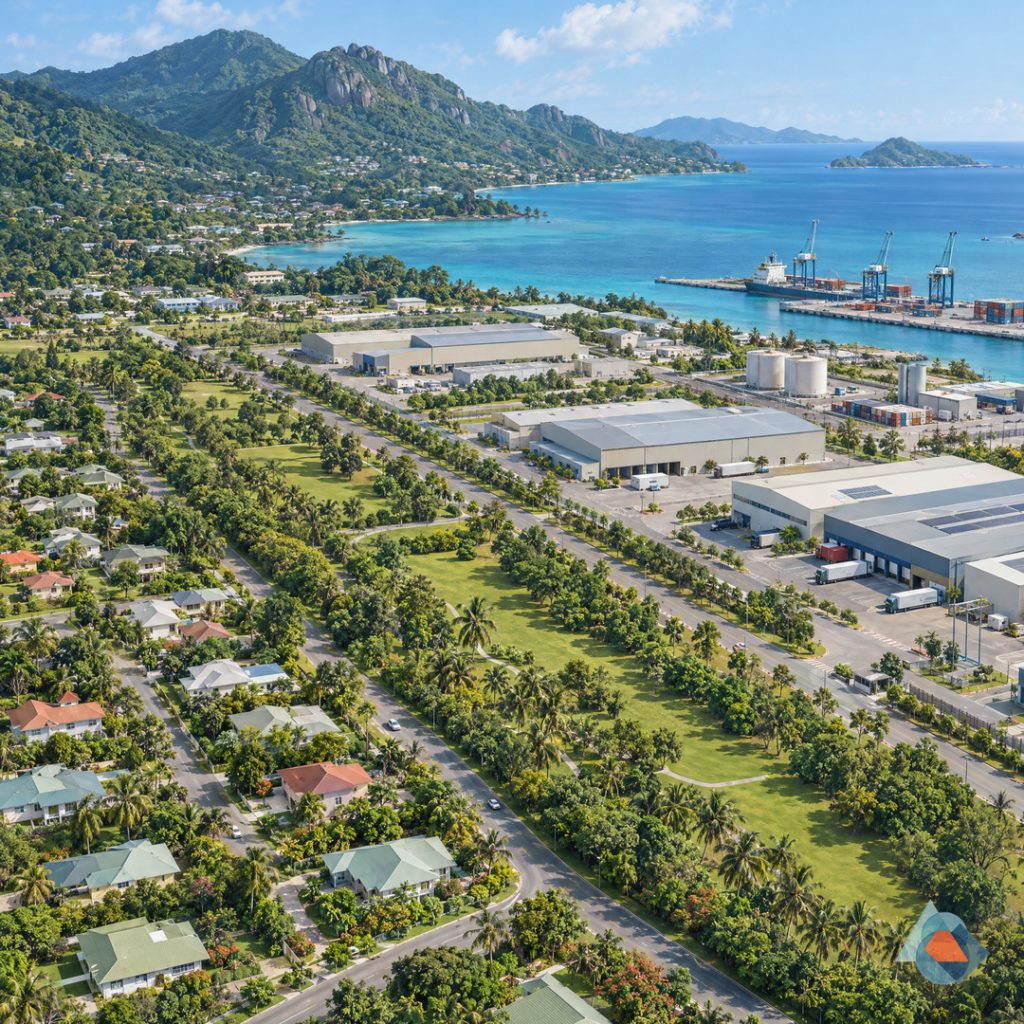
Featured image: original AI-generated editorial illustration for DRRM; not a photograph or reconstruction of the event.