
Seychelles is Africa’s richest country—if we mean economic output per person. That is a real achievement. It is not the same as saying every household is wealthy, that we live like the world’s richest populations, or that our prosperity is secure against a major shock.
For the Development and Resilience Research Monitor (DRRM), the useful question is not whether to celebrate or dismiss the label. It is whether Seychelles can turn high income into lasting security: homes that remain safe, essential services that keep working, livelihoods that can withstand disruption, and recovery that does not leave the least protected behind.
Published 23 October 2026. The international table uses comparable 2024 World Bank observations, from the database updated on 8 October 2026. Other figures below identify their own reference years; projections are not presented as completed outcomes.
Richest by which measure?
GDP per capita divides a country’s annual economic output by its population. At market exchange rates, Seychelles recorded about US$18,365 per person in 2024. On a purchasing-power-parity (PPP) basis, which adjusts for differences in national price levels, the figure was about 33,339 international dollars. These measures support the familiar African-leading label, but reveal a substantial gap with wealthy economies elsewhere.
| Economy | 2024 GDP per person: current US$ | 2024 GDP per person: PPP international $ |
|---|---|---|
| Seychelles | 18,365 | 33,339 |
| Mauritius | 11,991 | 31,697 |
| United States | 86,170 | 86,170 |
| Norway | 89,889 | 105,657 |
| Singapore | 94,897 | 153,161 |
| Switzerland | 107,702 | 97,468 |
The PPP comparison matters: Seychelles remains ahead of Mauritius, but the gap is much narrower after adjusting for price levels. Nor does adjusting for prices erase the distance from the global rich-country comparators. The IMF’s October 2026 outlook contains more recent estimates and projections; they should not be mixed into this 2024 table as though they were equally settled observations.
The World Bank also classifies Seychelles as a high-income economy. That classification uses GNI per capita under the Atlas method, not GDP per capita. It describes an average national income category—not household net worth or protection from disaster risk.
A high national average is not everyone’s lived experience
GDP is a flow of production, not a stock of wealth. It does not tell us who owns assets, how income is distributed, what a typical worker takes home, or whether a family can afford housing, food and savings. PPP improves the international price comparison, but does not measure every household’s budget or remove inequalities within Seychelles.
A fair assessment therefore needs median disposable income, household consumption, poverty and inequality data, housing costs, and the quality and accessibility of public services alongside GDP. A national average alone cannot establish that everyone is comfortable—or that everyone is struggling.
Seychelles’ achievements extend beyond output. The UNDP 2025 Human Development Report, using 2023 data, places it in the very high human development group: HDI 0.848, ranked 54th. That is above Mauritius at 0.806, but below Singapore at 0.946 and Norway and Switzerland at 0.970. HDI adds health and education to income; it still is not a measure of household wealth or disaster resilience.
Why a high-income SIDS can still be highly vulnerable
Seychelles is a small island developing State (SIDS). Smallness, remoteness and a narrow economic base can make essential systems expensive and alternatives limited. UN-OHRLLS explains why high transport costs, import dependence, reliance on external markets and exposure to environmental shocks are structural challenges for SIDS—not evidence that island populations have failed to develop.
For Seychelles, tourism and fisheries generate most foreign-exchange earnings and support many jobs. Both depend on healthy ecosystems, connectivity and demand outside our control. The IMF’s 26 May 2026 assessment notes that Seychelles imports about 95% of its energy, much of its food and most industrial inputs. Disrupted flights or shipping, more expensive fuel, or a fall in visitors can therefore affect businesses, public revenue and household budgets together.
Climate change adds pressure. The World Bank’s March 2026 Country Climate and Development Report findings identify rising seas, coastal erosion, marine heatwaves and extreme rainfall as threats to the country’s economic pillars. The IPCC’s small-islands assessment also explains how rising sea level combines with waves, tides and storms to increase coastal flooding. This is a regional assessment, not a prediction for an individual Seychelles property.
In UNDRR terminology, disaster risk concerns potential losses arising from the interaction of hazard, exposure, vulnerability and capacity. A hazard is not automatically a disaster. Where and how we build, the condition of infrastructure, access to warnings, and the ability to act influence the consequences.
Could we become “poor overnight”?
Not literally as a national prediction. But a sudden shock can destroy assets, stop earnings and push vulnerable households into hardship very quickly. Income classifications are updated periodically; they do not change at the instant a storm strikes. Damage to buildings is a loss of wealth, while interrupted production affects GDP over time. Neither is captured adequately by a single ranking.
COVID-19 provides a concrete warning. The IMF’s July 2025 retrospective records an economic contraction of nearly 12% in 2020. A prosperous economy could suffer a severe external shock without first losing its skills, institutions or infrastructure.
December 2023 illustrates a different challenge: heavy rainfall, flooding and landslides occurred during the same emergency period as the Providence explosives-warehouse blast. ECHO’s 11 December 2023 report documents the separate impacts. The flood and landslides were hydrometeorological hazards; the explosion was a technological/industrial hazard. This is not evidence that climate change caused the blast. It shows why continuity plans must cope with simultaneous demands on emergency services, infrastructure and recovery resources.
Longer-term losses also matter. The World Bank’s 2026 assessment says that without action, climate and environmental pressures could leave GDP more than 6% lower by 2050. This is a conditional scenario relative to a development path—not a forecast that 6% will disappear tomorrow.
How resilient are we already?
The evidence points to real capacity, but uneven protection—not helplessness and not immunity. UNDRR defines resilience in terms of resisting, absorbing, accommodating, adapting to, transforming and recovering from hazard effects while preserving and restoring essential functions. Preparedness contributes to resilience, but does not substitute for safer development.
Financial buffers have improved. The IMF’s May 2026 assessment reports 2025 growth of 5.1%, a primary fiscal surplus of 2.5% of GDP, public and publicly guaranteed debt of 53.6% of GDP, and reserves exceeding four months of imports. A primary surplus excludes interest payments; it is not a pot of cash available for any emergency. Reserves support external payments, not an unlimited reconstruction fund. Nevertheless, these are meaningful buffers.
Practical adaptation exists. UNDP’s October 2021 account of La Digue drainage works describes reduced flooding during heavy rain in the areas served. Such local results matter more than assuming a national income label guarantees safety.
Delivery and concentration remain weaknesses. The IMF’s 2025 staff report identifies procurement and capacity bottlenecks and capital-project underspending. Money allocated to resilience is not the same as functioning protection. Tourism concentration, imported essentials and exposed coastal assets also mean one shock can create several connected pressures.
We should not assign Seychelles an invented resilience score or infer that every community is equally protected. The test is whether critical services continue, losses are reduced, and households—including people with disabilities, older people and those with little savings—can recover without lasting exclusion.
Turning income into security: practical priorities
- Prevent new risk and reduce existing risk. Use hazard-informed land-use decisions, enforce appropriate building and industrial-safety standards, maintain drainage and slopes, and assess critical assets before approving new development. Keep residual-risk plans for hazards that cannot be eliminated.
- Make essential systems harder to interrupt. Prioritise water, power, health, communications, ports and airport continuity. Test backup arrangements and supply-chain alternatives; combine ecosystem protection with appropriate engineered coastal measures rather than assuming one seawall solution fits every shore.
- Protect buffers and deliver the projects. Pair credible debt management with stronger appraisal, procurement, maintenance and transparent reporting of completed resilience investments. The World Bank estimates targeted infrastructure upgrades and local risk management could halve future economic losses; this is a modelled opportunity, not a guarantee.
- Broaden livelihoods without promising instant diversification. Support higher-value, lower-impact tourism, sustainable fisheries, skills, digital services and local renewable energy where viable. Give households and smaller firms usable continuity plans, accessible warnings and support arrangements that can expand after a shock.
- Prepare recovery finance before an emergency. Assess a mix of contingency resources, contingent credit and suitable insurance against actual costs and coverage gaps. Practise compound-emergency response and make recovery safer through Build Back Better, rather than recreating the same exposure.
International finance should recognise vulnerability as well as income. The UN’s Multidimensional Vulnerability Index is intended to make structural vulnerability and resilience more visible. It does not automatically make Seychelles eligible for every concessional financing window; each institution retains its rules.
The fairer label
Seychelles is a high-income African success story with significant small-island vulnerabilities and resilience that must be continually strengthened. “Richest in Africa” is defensible shorthand for a specified per-person economic measure. Used without those qualifications, it can hide household pressures, global gaps and the cost of protecting hard-won gains.
The ambition should not simply be to stay first in a ranking. It should be to make prosperity durable: fewer preventable losses, reliable essential services, diversified opportunities and a recovery that works for everyone.
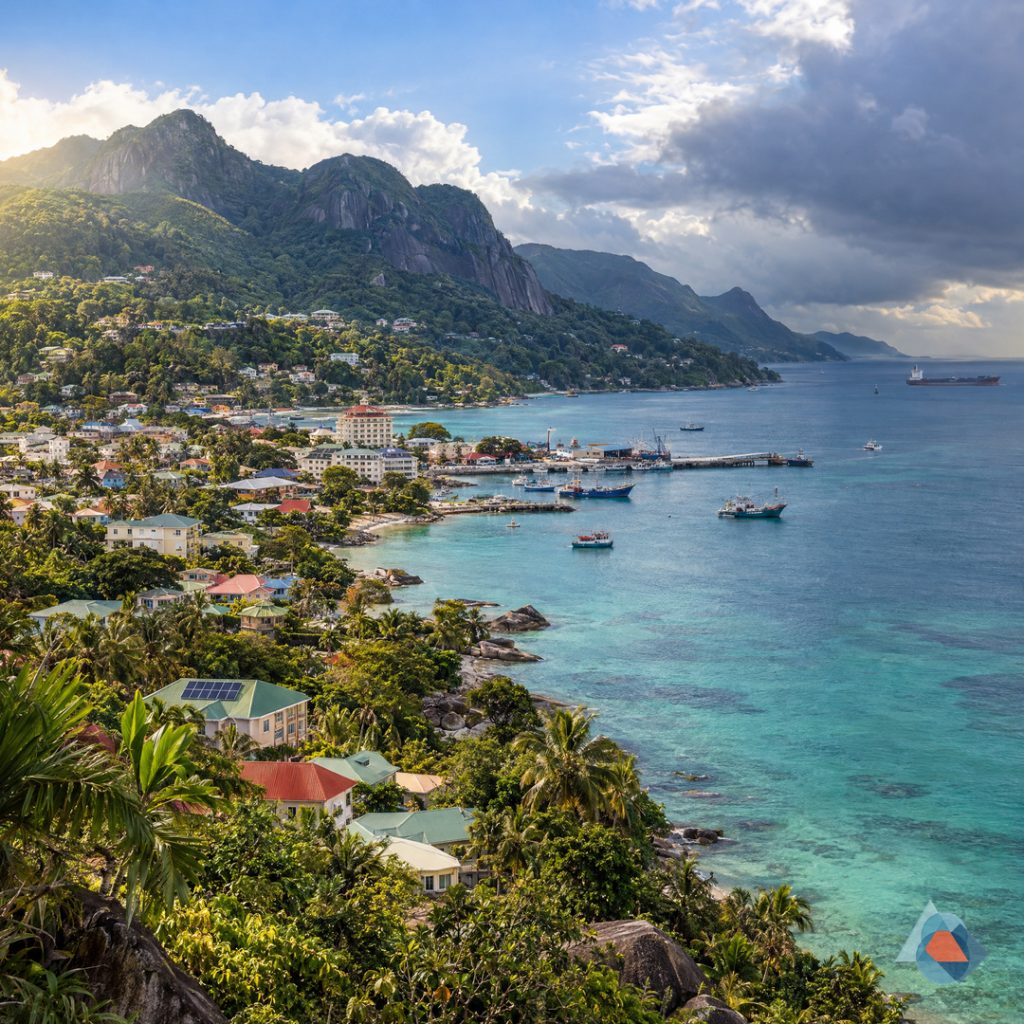
Featured image: original AI-generated, photo-style editorial illustration for DRRM, inspired by Seychelles. It is not a documentary photograph of a real location or event.
#Seychelles #SIDS #Resilience #DisasterRiskReduction #SustainableDevelopment #ClimateAdaptation #BlueEconomy #DRRM