
Build Back Better, Preparedness, Prevention
A Safer Home in Seychelles: Build Resilience, Practise Preparedness
October 22, 2026
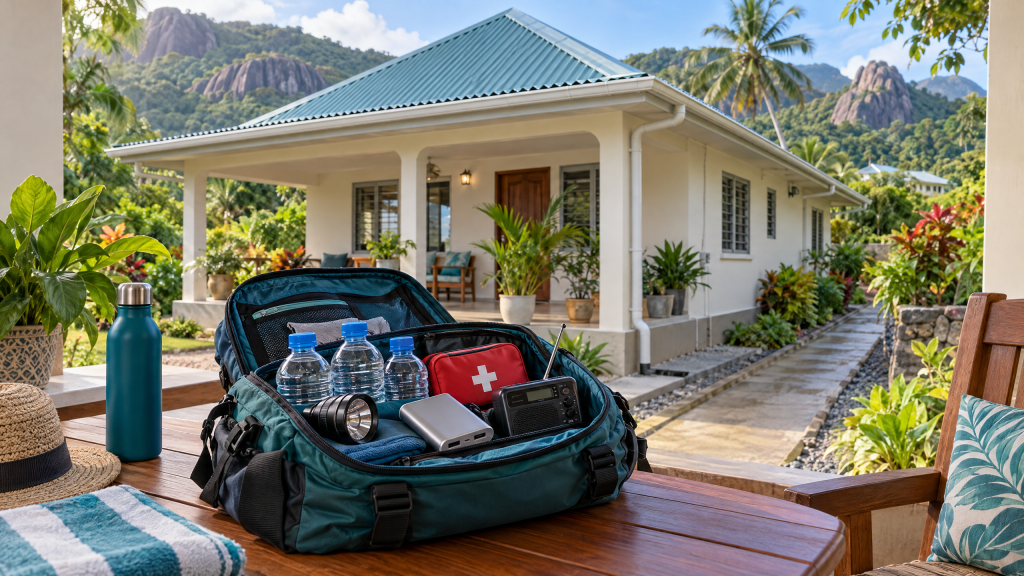 A resilient home starts with everyday care and informed building decisions. In Seychelles, preparing for heavy rain, strong winds, flooding and landslides can help protect our families and reduce damage. Whether you own or rent, small steps taken early can make a difference.
Build and renovate with safety in mind
Before building or extending a home, seek advice from qualified local building professionals and the relevant planning authorities. Ask how flooding, coastal exposure, slope stability and drainage could affect your property.
A strong home depends on more than its walls. Ask your building professional to assess the connections between the roof, walls and foundations, and recommend materials and fixings suitable for local conditions. Roof repairs, retaining walls and structural alterations should not be improvised.
If you rent, report leaks, loose roofing and signs of structural damage to your landlord promptly.
Give rainwater a safe route
Check gutters, downpipes and household drains regularly. Remove leaves and rubbish when conditions are safe, before heavy rain arrives.
Watch where water collects around your home. Persistent pooling, erosion or overflowing drainage deserves attention. Get professional advice before changing drainage, especially near slopes or retaining walls. A solution should not redirect risk towards a neighbour’s property.
Never enter a flowing drain or climb onto a wet roof to clear a blockage.
Prepare before strong winds
Secure loose outdoor furniture, tools and other items that could be blown around. Arrange safe repairs to damaged roofing and seek qualified help for dangerous branches or trees near buildings and power lines.
Complete these checks in calm weather—not once strong winds or thunderstorms have begun.
Make a household emergency plan
Agree on how everyone will receive warnings, contact one another and reach a safer place if instructed to leave. Include children, older relatives, people with disabilities and pets in your arrangements.
Keep an easy-to-carry emergency kit with drinking water, non-perishable food, essential medicines, first-aid supplies, a torch, batteries, a radio, a charged power bank and waterproof copies of important documents. Check supplies regularly and adapt them to your household’s needs.
Know when to act
Follow forecasts and warnings from the Seychelles Meteorological Authority and instructions from emergency authorities. Do not walk or drive through floodwater.
If you notice new cracks in the ground, unusual ground movement or a leaning retaining wall, move away from the affected area and seek urgent advice. Do not attempt repairs during severe weather.
Start this week: check one drain, identify one repair and discuss your emergency plan with everyone at home. Preparedness works best when it becomes a habit.
Further guidance:
Seychelles Meteorological Authority, household precautions for heavy rain and strong winds: https://www.meteo.sc/news/seychelles-meteorological-authority-urges-continued-preparedness-as-heavy-rain-and-strong-winds-persist/
Department of Risk and Disaster Management (DRDM): https://www.drdm.sc/
National Emergency Management Agency, Your storm and cyclone resilient home: https://www.nema.gov.au/sites/default/files/2024-11/D2024%2083119%20%20NEMA%20-%20Your%20storm%20and%20cyclone%20resilient%20home.pdf
Ready.gov, Build an Emergency Kit: https://www.ready.gov/kit
An insight from the Development and Resilience Research Monitor (DRRM).