
Beyond Tourism and Fishing: A Practical Diversification Agenda for Seychelles
October 23, 2026
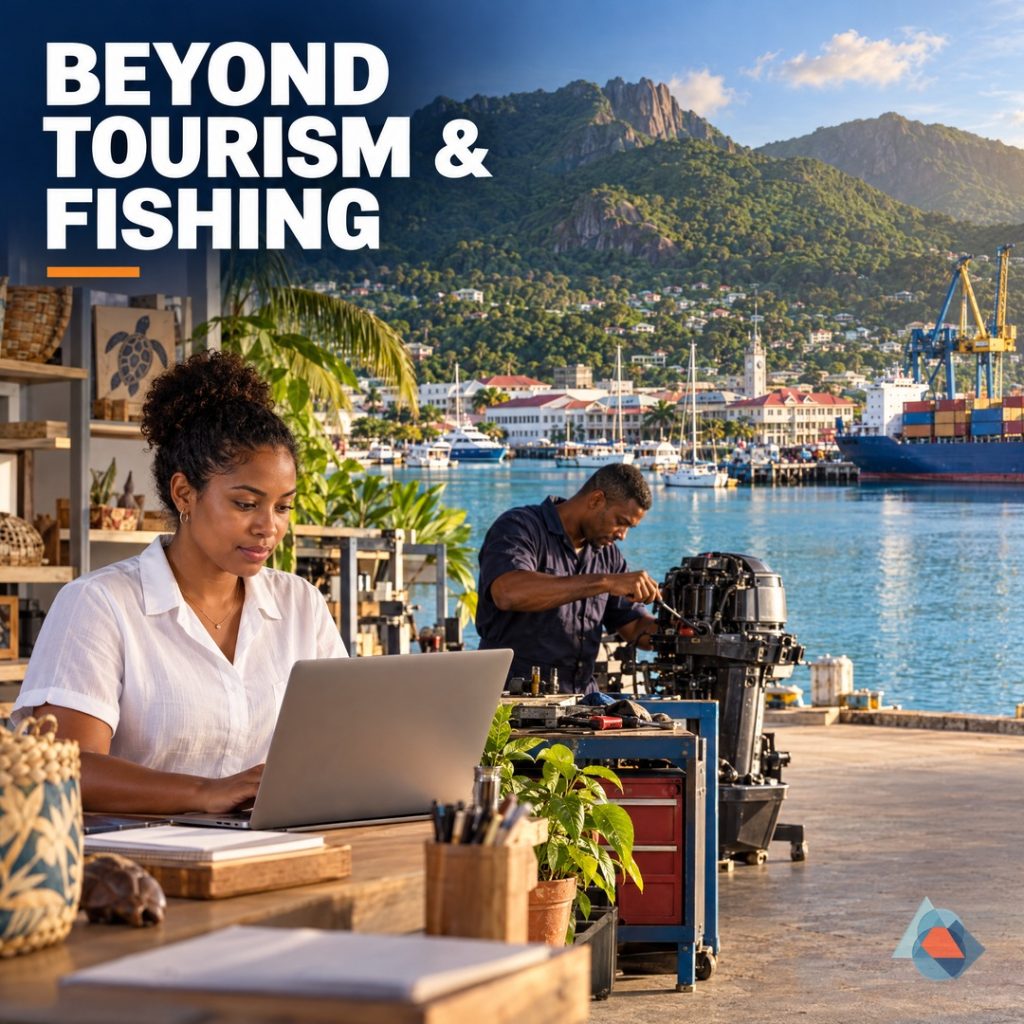
Development and Resilience Research Monitor (DRRM) asks a practical question for Seychelles: what can grow when visitor numbers and catches cannot grow forever?
Move from two sectors to a wider value chain
Tourism and fishing are not problems to be discarded. They are strong economic platforms, but not the whole economy. In its May 2026 Article IV assessment, the IMF estimated real GDP growth of 5.1% in 2025, driven by record tourist arrivals. It called for structural reforms to boost competitiveness, diversification and inclusive growth. These are dated estimates, not final results for 2026. Tourism can generate growth while the country still needs a broader set of export earnings and jobs.
That points to a better definition of diversification. It is not simply adding another small industry. It is building activities that sell skills, services or processed products beyond the limited domestic market, while helping existing sectors buy more from Seychellois firms.
Digital and professional services
Digital work is the most obvious scale opportunity because a software service or accounting process can cross borders without shipping a container. The World Bank’s current Seychelles profile identifies lagging digital adoption, skills shortages and business constraints as limits on productivity and private-sector dynamism. Its Country Growth and Jobs Report estimates that a broad reform package could lift GDP by 13% by 2040, create 2,900 additional jobs and generate the equivalent of more than 7,600 better-paying jobs. These are modelled gains, not a forecast, and depend on reforms.
The policy test is therefore specific: reliable connectivity, digital public services, data protection, payment systems and employer-linked training. Seychelles could target bookkeeping, compliance, design, remote customer support, marine data and specialist travel technology rather than promise a vague “tech hub”. Public procurement can give local firms reference projects, while partnerships with firms in Mauritius and other SIDS can open export channels. The constraint is talent. A training centre without employers, internships and recognised qualifications will not create a tradable-services sector.
More value from the ocean
Fishing can diversify without abandoning fishing. The opportunity is to capture more of the chain: cold storage, quality testing, traceability software, boat and equipment maintenance, packaging, branded products and marine research. Those businesses can serve regional markets even when the volume of raw catch is stable. They also make fisheries policy more economically useful than a simple landing-tonnage target.
UN Trade and Development makes the same case for SIDS: build productive capacities, local value addition and stronger links between traditional sectors and newer industries. It cites Mauritius as a SIDS example that used financial regulation, skills and connectivity to become a financial and business-services hub. UNCTAD’s 2024 analysis is a general SIDS lesson, not proof that Seychelles can reproduce Mauritius on the same timetable. Scale, institutions and history differ.
Energy, water and the blue economy
Energy and water are not only utility questions. They determine whether a hotel, fish processor, farm or data business can operate at predictable cost. UNCTAD notes that water and energy shortages constrain productive capacity across SIDS, and describes Cabo Verde’s use of renewable energy with desalination as one response. That example is a reference point, not a ready-made Seychelles project.
For Seychelles, a credible diversification programme could connect solar and storage, efficient water production, waste recovery and marine services. The economic return should be measured in lower imported-fuel exposure, fewer interruptions and firms able to sell expertise abroad. “Blue economy” should mean named products and jobs—marine monitoring, vessel services, aquaculture research or environmental accounting—not a slogan attached to every coastal project.
What to measure
The National Bureau of Statistics is the right starting point. Its website says the Economic Statistics Section compiles key macroeconomic indicators and that the Bureau coordinates the national statistical system. NBS publishes the official baseline, but a diversification scorecard should go further: non-tourism export receipts, domestic procurement by hotels and processors, digital-services jobs, female and youth participation, business survival, training-to-employment rates and value added per worker.
The World Bank says Seychelles remains vulnerable because of small size, remoteness and limited diversification, despite high income and low unemployment. That is not an argument for chasing every fashionable sector. It is an argument for selecting a few tradable niches, fixing the capabilities they need and publishing whether they are producing value. Beyond tourism and fishing, the winning strategy is disciplined breadth: more value from existing assets, plus exportable services that are not limited by the size of the islands.
Published 23 October 2026. Policy options are DRRM proposals; modelled gains are conditional, not forecasts.
Image: original AI-generated editorial illustration for DRRM. People and settings are illustrative, not a documentary photograph of a real household, workplace or event.