
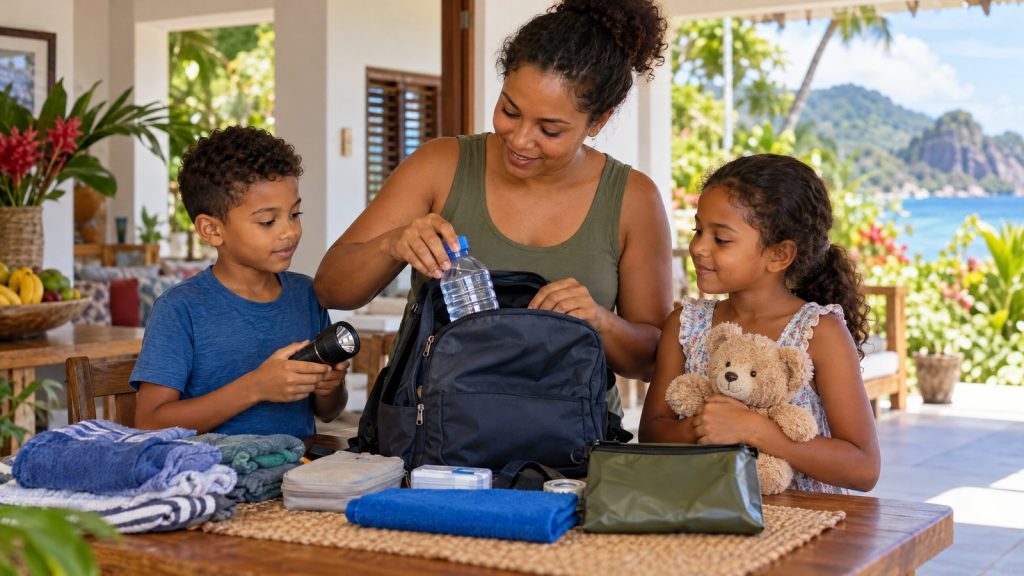
Children cope better when adults explain what may happen without frightening them. A calm plan can turn rain, wind, flooding or a power cut into familiar actions. Involve children while keeping adult responsibility for safety decisions.
Explain simply
Use clear words: heavy rain can fill low places; strong wind can move objects; an outage can stop lights and devices. Avoid graphic stories and promises that nothing will happen. Ask what worries the child and listen to trusted alerts.
Give safe jobs
Children can choose shelf-stable snacks, label a kit, count torches or place a comfort item in a bag. Teach their name, caregiver name and meeting place. They must never clear gutters, touch wires, enter floodwater, approach a slope or use candles, generators or tools.
Make a child-friendly plan
Keep a card with caregiver contacts, allergies and a safe meeting place in a school bag. Explain who may collect them. Include a book, game, headphones or comfort object. Consider school, childcare and travel routines.
Practise as a game
Walk to the safe room or exit, practise “stop, look, listen”, and rehearse a short check-in message. Let the child ask questions afterward. Repeat after moving house or changing school, praising careful choices rather than speed.
During an event
Keep children close, follow official instructions and model calm behaviour. Do not let them watch distressing footage or join cleanup. If separated, use the communication plan and approved contacts; never send a child to search for a family member.
Preparedness is most useful when it becomes a normal household habit. Review this checklist with the people who share your home, adapt it to your location and abilities, and keep practical supplies where they can be reached. Conditions can change quickly across the islands, so use current official information for decisions about travel, shelter and safety. If a task seems hazardous, pause and seek qualified help rather than improvising. Share updates with household members, check supplies after use, and revisit the plan whenever someone’s needs or contact details change. Keep decisions practical, calm and proportionate to the information available.
Further guidance
- Ready.gov: Make a plan (general international guidance)
- Ready.gov: Build an emergency kit (general international guidance)
- Ready.gov: Floods (general international guidance)
An insight from the Development and Resilience Research Monitor (DRRM).