
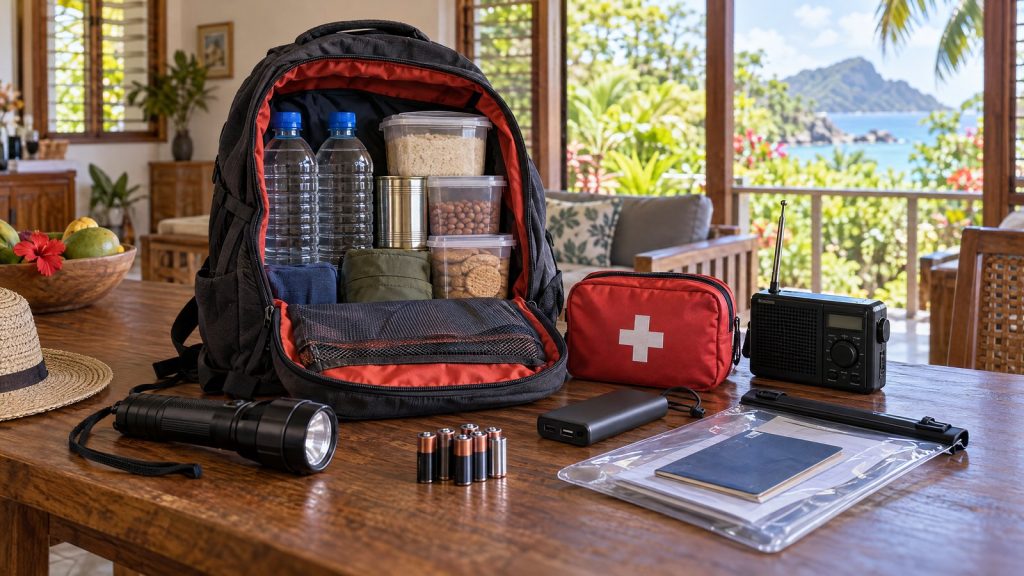
A useful emergency kit is a practical, portable set of basics for several days when rain, wind, flooding or an outage interrupts normal services. Adapt it to island living, climate and personal needs.
Start with essentials
Use a labelled easy-carry container in a dry, known place. Include drinking water, shelf-stable food, a torch, spare batteries, radio if available, first aid, whistle, hygiene supplies, rubbish bags, manual can opener and charging options.
Add personal needs
Pack medicines, prescriptions, glasses, infant supplies, menstrual products, clothing, sturdy footwear and mobility or communication aids. Add pet food and water, lead or carrier, comfort items, waterproof documents and a written contact and medical-information list.
Make it work
Choose foods that tolerate warmth and humidity, and protect paper, batteries and electronics from moisture. Keep a small grab-and-go version near the exit. Do not store fuel, chemicals or medicines in ways that create heat or fire risk.
Maintain it
Every few months check expiry dates, replace opened items, test torches and update medicines, clothing sizes and contacts. Ask everyone where the kit is and practise carrying it. A kit supports decisions; it does not make floodwater or damaged buildings safe.
Preparedness is most useful when it becomes a normal household habit. Review this checklist with the people who share your home, adapt it to your location and abilities, and keep practical supplies where they can be reached. Conditions can change quickly across the islands, so use current official information for decisions about travel, shelter and safety. If a task seems hazardous, pause and seek qualified help rather than improvising. Share updates with household members, check supplies after use, and revisit the plan whenever someone’s needs or contact details change. Keep decisions practical, calm and proportionate to the information available.
Further guidance
An insight from the Development and Resilience Research Monitor (DRRM).