
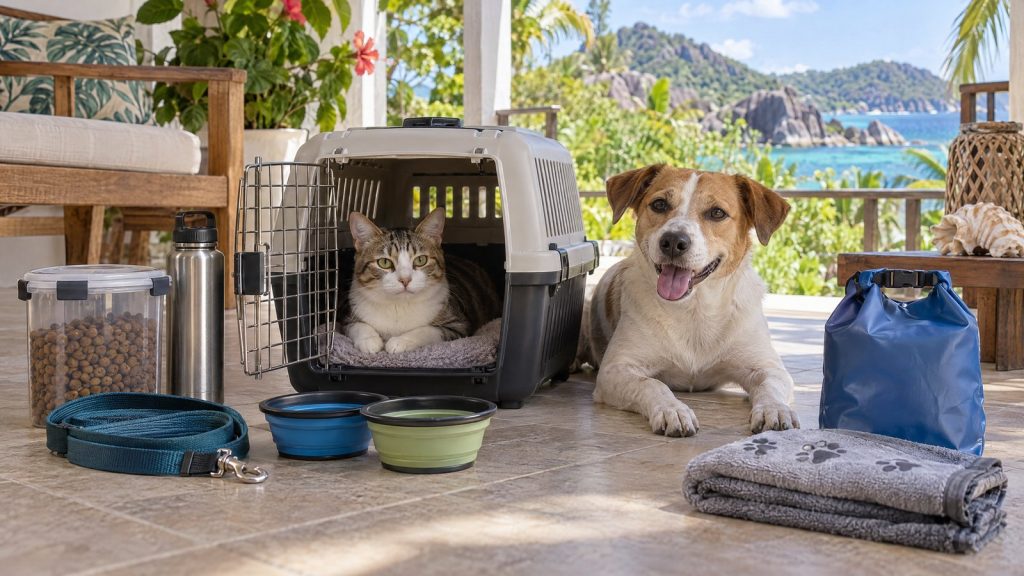
Pets depend on people for food, water, shelter and calm decisions. Include them in the household plan before heavy rain, strong wind, flooding or an outage. Never assume a pet can safely remain behind if people must leave.
Build a pet profile
Record each animal’s name, species, age, feeding routine, medication, allergies, behaviour and veterinarian contact. Keep photographs and vaccination or identification records waterproof. Keep collars current where appropriate, and ask a veterinarian about microchipping.
Pack supplies
Set aside familiar food, water, bowls, medication, waste bags or litter, lead, harness, carrier, towel and comfort item. Keep the carrier accessible and ventilated. Birds, fish and small animals need species-specific advice.
Decide where to go
List friends, relatives, boarding facilities, shelters and veterinary services. Confirm transport and whether a destination accepts animals; emergency arrangements can differ. Service animals have distinct access protections, but plan their needs too.
Practise calmly
Let an animal enter its carrier without force and include it in a rehearsal. Keep cats indoors in severe weather and dogs leashed outside. Never let pets investigate floodwater, fallen lines, unstable slopes or unfamiliar debris.
After disruption
Keep pets away from contaminated water and damaged structures. Observe eating, breathing and behaviour and seek veterinary advice when needed. If separated, use current photographs and the agreed animal-care network.
Preparedness is most useful when it becomes a normal household habit. Review this checklist with the people who share your home, adapt it to your location and abilities, and keep practical supplies where they can be reached. Conditions can change quickly across the islands, so use current official information for decisions about travel, shelter and safety. If a task seems hazardous, pause and seek qualified help rather than improvising. Share updates with household members, check supplies after use, and revisit the plan whenever someone’s needs or contact details change. Keep decisions practical, calm and proportionate to the information available.
Further guidance
- Red Cross: Pet disaster preparedness (general international guidance)
- Ready.gov: Make a plan (general international guidance)
- Ready.gov: Build an emergency kit (general international guidance)
An insight from the Development and Resilience Research Monitor (DRRM).