
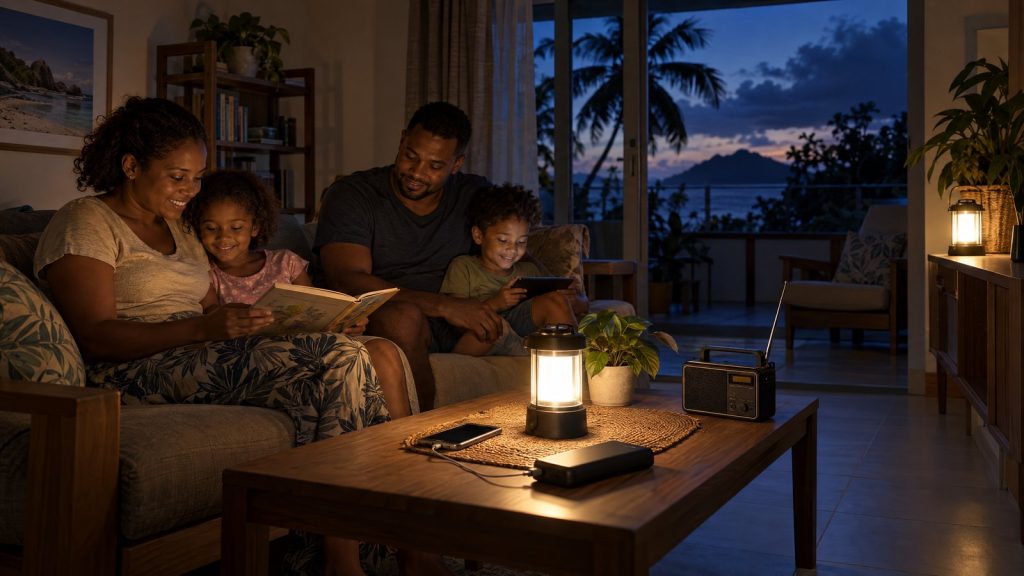
Power cuts can interrupt lights, communications, refrigeration, water systems and medical equipment. A few preparations reduce injury and food waste. In tropical Seychelles conditions, include a plan for heat, ventilation and any device dependent on electricity.
Prepare before an outage
Keep torches where everyone can reach them, with spare batteries, and charge phones and power banks when weather may disrupt service. Store shelf-stable food and safe water. List every essential device, including refrigerated medicines, and ask a clinician or supplier about a backup plan.
Make cooking safer
Use torches rather than open flames where possible. Never use a gas oven or stove to heat a room. If using a generator, camp stove or charcoal appliance, follow instructions and use it outdoors, well away from doors and windows; keep it dry and out of floodwater. Carbon monoxide has no smell.
Protect appliances and food
Disconnect sensitive electronics to reduce surge damage. Keep refrigerator and freezer doors closed. Follow food-safety guidance and discard food that has become unsafe. Do not touch wet appliances, sockets or fallen lines. Report hazards through established official channels.
Plan for people and pets
Check on anyone living alone, older people, children and neighbours dependent on powered medical equipment, without entering unsafe areas. Keep pets away from cables, flames and hot appliances. Identify a safe, ventilated place with power if heat becomes dangerous.
When power returns
Wait for a stable supply before reconnecting equipment. If there are sparks, smoke, water intrusion or damaged wiring, leave repairs to a qualified professional. Restock food and review what worked. Never use a generator indoors.
Preparedness is most useful when it becomes a normal household habit. Review this checklist with the people who share your home, adapt it to your location and abilities, and keep practical supplies where they can be reached. Conditions can change quickly across the islands, so use current official information for decisions about travel, shelter and safety. If a task seems hazardous, pause and seek qualified help rather than improvising. Share updates with household members, check supplies after use, and revisit the plan whenever someone’s needs or contact details change. Keep decisions practical, calm and proportionate to the information available.
Further guidance
- Ready.gov: Power outage safety (general international guidance)
- Ready.gov: Build an emergency kit (general international guidance)
- Seychelles Meteorological Authority: Weather warnings
An insight from the Development and Resilience Research Monitor (DRRM).