
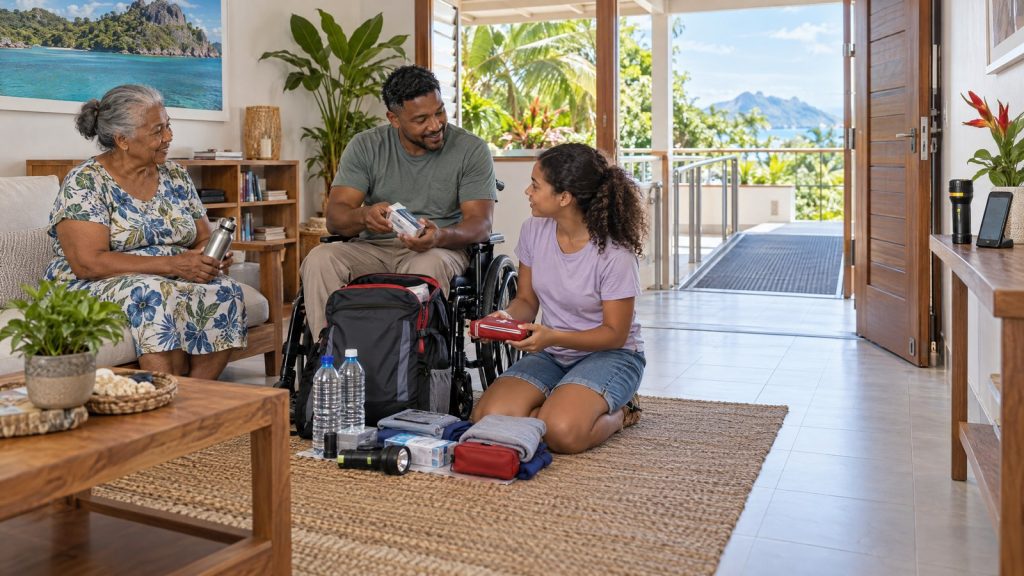
Preparedness works best when it starts with the person, not an assumption about age or disability. In Seychelles, heat, rain, slopes, stairs, transport and power interruptions may affect people differently. Ask what support is wanted and build it into ordinary routines.
Map daily needs
List medicines, dietary needs, mobility aids, glasses, hearing devices, communication tools and equipment needing electricity. Note accessible exits and a safe room away from windows. Keep pathways clear and frequently used items reachable without climbing.
Choose reliable helpers
Agree on two or more people who can check in, help with transport or carry supplies. Share consent-based information about routines, medication and preferred communication. A buddy should ask before moving someone or equipment and respect independence.
Prepare equipment
Keep labelled essential medicines and prescriptions according to clinical advice. Protect hearing aids, chargers and other devices from water and heat. Ask a clinician or equipment provider about backup power and safe storage; do not improvise medical repairs.
Make evacuation practical
Walk the route and identify steps, narrow gates, uneven ground and pooled rainwater. Plan accessible transport and a destination in advance, confirming it can accommodate equipment, assistance animals and privacy. Practise with the actual mobility aid and allow extra time.
Include the person
Use plain language, large print, audio, pictures or a preferred format. Rehearse alerts, a check-in message and kit location. During an event, follow official directions and never leave someone dependent on support without an agreed handover.
Preparedness is most useful when it becomes a normal household habit. Review this checklist with the people who share your home, adapt it to your location and abilities, and keep practical supplies where they can be reached. Conditions can change quickly across the islands, so use current official information for decisions about travel, shelter and safety. If a task seems hazardous, pause and seek qualified help rather than improvising. Share updates with household members, check supplies after use, and revisit the plan whenever someone’s needs or contact details change. Keep decisions practical, calm and proportionate to the information available.
Further guidance
- Red Cross: Inclusive preparedness resources (general international guidance)
- Ready.gov: Make a plan (general international guidance)
- Ready.gov: Build an emergency kit (general international guidance)
An insight from the Development and Resilience Research Monitor (DRRM).