
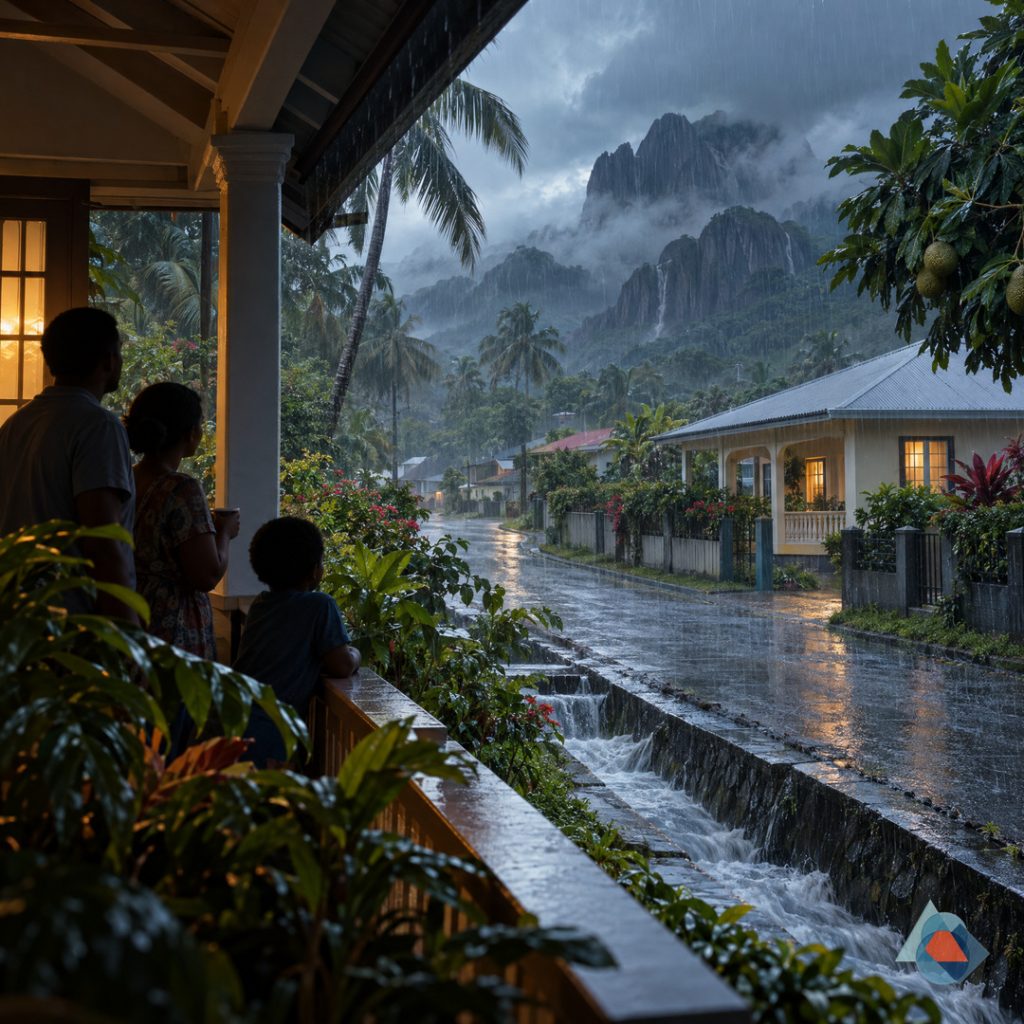
What began as a forecast became a national recovery challenge in October. On 16 October 2026, the Seychelles Meteorological Authority (SMA) warned that periods of heavy rainfall and thunderstorms were expected across the country over the weekend. It cautioned that prolonged or intense rain could increase the risk of localised flooding, landslides and water accumulation in low-lying and vulnerable areas, and urged communities to protect lives, property and livelihoods. Read the SMA warning.
In a message dated 20 October, President Dr Patrick Herminie said torrential rain on 19 October had caused flooding, landslides and fallen trees, leaving serious damage to homes, roads and property across several districts. He expressed sympathy to affected households and said relevant agencies were committed to delivering assistance as swiftly as possible. The message also recognised responders and community members who cleared roads, opened their doors and helped neighbours, while urging continued vigilance and attention to authorities’ guidance as weather conditions were monitored. Read the State House message.
These are the documented facts available from the SMA and State House sources. They establish the hazard and its impacts without establishing a rainfall total, a return period, or a cause such as climate change. They also do not, by themselves, provide a complete incident count or a basis for ranking affected districts.
The Development and Resilience Research Monitor (DRRM) views this episode through a simple, useful lens drawn from UNDRR: disaster risk emerges when a hazard interacts with exposure, vulnerability and capacity. Heavy rain is the hazard; people, homes, roads and other assets in harm’s way are exposure; susceptibility to harm is vulnerability; and the resources, services, knowledge and coordination available to cope are capacity. Risk is the potential for resulting losses. This framework is not a diagnosis of any household or community. It is a way to ask better preparedness questions while authorities and residents manage recovery.
Practical steps after the rain
First, follow current SMA advisories and official instructions, especially if conditions remain unsettled. Avoid flooded roads, moving water, unstable slopes and areas beneath damaged trees; do not enter a damaged building until competent authorities say it is safe. Keep essential medicines, drinking water, phones, chargers, identity documents and emergency contacts accessible, and check on neighbours who may need assistance. These are general safety measures, not individual medical, engineering or legal advice.
For organisations and households reviewing the event, UNDRR’s risk-reduction approach points to three jobs: prevent new risk, reduce existing risk and manage residual risk that cannot be eliminated. That can mean maintaining drainage and access routes, checking roofs and retaining structures, protecting critical records, clarifying evacuation and family contact plans, and strengthening warnings and accessible communication. Any repair or rebuilding decision should be based on site-specific assessment by the relevant authorities or qualified professionals—not assumptions drawn from this article.
Recovery is also an opportunity to build back better: integrate risk reduction into rehabilitation and reconstruction, while considering livelihoods and the environment rather than simply replacing what was damaged. The October event is a reminder that readiness is shared work—grounded in official warnings, careful local assessment, capable institutions and solidarity between neighbours.
Before work begins, document visible damage from a safe distance and use the reporting channels designated by authorities. Keep receipts and records where appropriate, but leave technical inspections, clearance of unstable slopes and decisions about road access to authorised teams. Clear information about what is open, closed or unsafe helps prevent a second wave of harm during recovery.